Curious Origins of 8 Everyday Superstitions
Superstitions rarely arrive with a citation. They slip in through the side door: a grandmother’s warning, a habit copied at a card table, a rule repeated in a school corridor until it feels true. Most of us carry a few without examining them. We avoid walking under a ladder, toss a pinch of salt, or knock twice on a doorframe after saying something optimistic.
What follows is not a debunking exercise. It is a look at the odd, practical, and sometimes deeply symbolic roots of eight familiar beliefs. Knowing where they came from does not make them less fun. It can make them easier to hold lightly.
Mirrors: A Soul in the Glass
The idea that a broken mirror brings seven years of bad luck is one of the most durable. In older European folklore, a mirror was not simply furniture. A reflection could be a second self, a soul, or a threshold. Break the glass and you damage the reflection; harm to the soul follows.
The seven-year part has several explanations. One ties it to old ideas about the body renewing itself in seven-year cycles. Another treats seven as a familiar number in folklore, potent enough to attach to any serious misfortune. The paper trail is messy, which is typical.
In practice, the superstition has a useful side: broken glass is sharp. If a mirror cracks, put on shoes, wrap the pieces in newspaper or cardboard, and sweep rather than vacuuming slivers. Replace the mirror when convenient; clear the glass sooner. If you are superstitious, treat the accident as a pause, not a prophecy.
Ladders and Salt: Bad Luck With a Practical Edge
Walking under a ladder
A ladder leaning against a wall creates a triangle. In Christian iconography, the triangle became associated with the Trinity, so passing through it could seem like trespass. Earlier traditions may have treated the space as a boundary. The superstition also has a blunt practical edge: people drop tools, paint, and roof tiles.
The rule survives because the warning is sensible. If someone is working above, give the ladder a wide berth. If you must pass, look up first and move deliberately. The bad luck is optional; the falling paint is not.
Spilling salt
Salt was once costly and essential for preserving food, so spilling it wasted a precious resource. It also carried associations with purity and hospitality; a shared salt cellar was a sign of trust. Throwing a pinch over the left shoulder is often explained as a way to blind or distract an evil spirit believed to lurk there. Another version treats the gesture as a small offering. The details vary by region, as folk beliefs tend to do.
If you spill salt and want to play along, keep the ritual small. A pinch is enough. The floor does not need a second seasoning.
- Toss a pinch over your left shoulder if the habit appeals, not the whole cellar.
- Keep the gesture low; salt on tile is a slipping hazard.
- Sweep dry salt after the spill, and wipe wet spills to protect wood and stone.
- Use a small bowl with a spoon for more control than a loose-lidded shaker.
Lucky Charms: Iron, Clover, and a Controversial Foot
The horseshoe
Iron was once a wonder material, credited with repelling malevolent spirits. A horseshoe above a door combined that protective metal with the shape of a threshold. The old debate is whether to hang it ends up, so luck stays inside, or ends down, so luck pours onto whoever enters. Both versions have defenders. Choose one and be consistent, mostly so you can stop arguing about it at family dinners.
Practical note: an old horseshoe is heavy. Use a proper hook or nail, check the wall, and do not hang it where someone tall will walk into it. If you rent, a removable hook is kinder.
The four-leaf clover
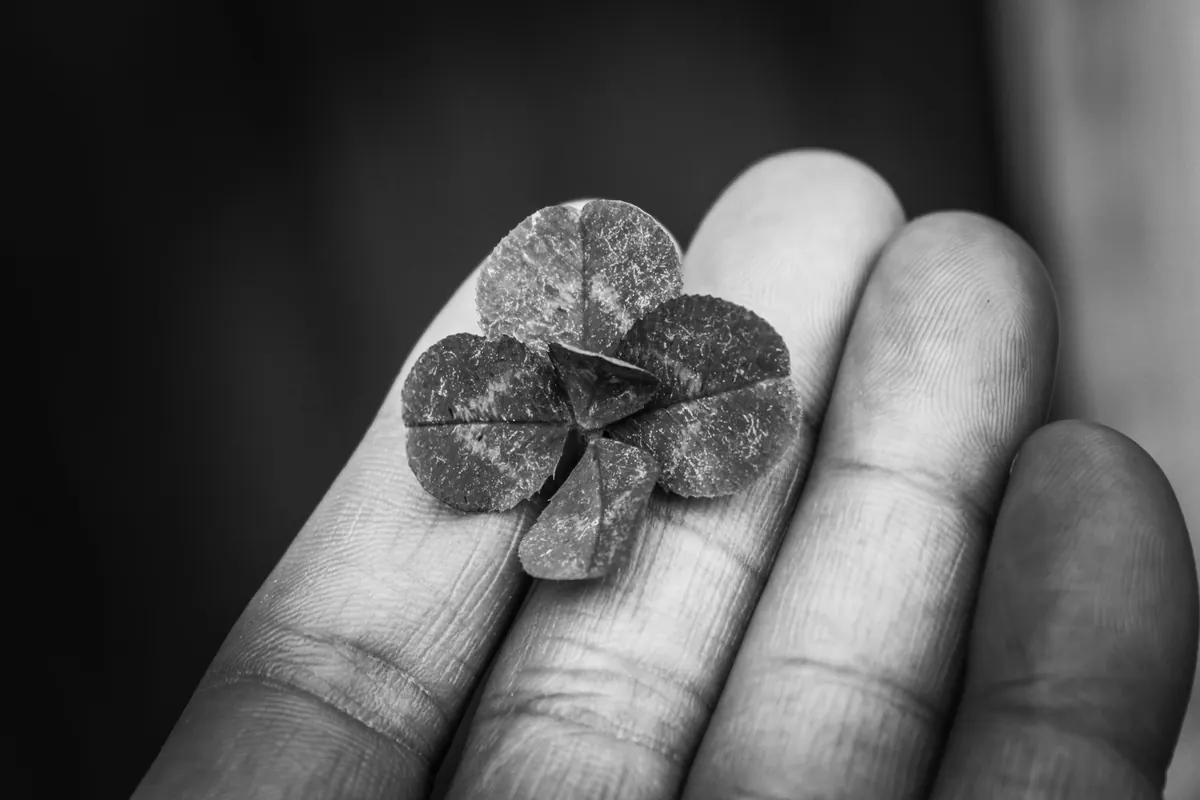
A four-leaf clover is rare among clovers, and rarity alone makes it feel charmed. Celtic and later European folklore invested clovers with protective associations, though the four-leaf version became the star. Finding one rewards patience: you have to slow down, look closely, and accept that most of what you find will have three leaves.
Press it between the pages of a heavy book and leave it for a few weeks. A plain card and a small frame will preserve it better than a pocket. The charm is in the finding, not in spending money on display.
The rabbit’s foot
Rabbit’s feet have been carried as talismans in various traditions, often with the uncomfortable implication that luck comes from another creature’s misfortune. The belief is old and tangled, and the modern charm trade makes it easy to forget the animal involved. If the shape appeals but the origin does not, use a wooden or fabric token instead. A lucky object does not have to be literal.
Knock on Wood and the Black Cat
Knocking on wood
Knocking on wood is usually a way to protect a good thing after saying it out loud. You might knock after mentioning a healthy streak, a quiet week, or a plan going well. One common explanation is that the gesture calls on tree spirits or gods for protection. Another is that it distracts mischievous forces before they can ruin a boast. The phrase “touch wood” appears in English, and variants exist across Europe, which suggests deep roots and many branches.
The modern version is flexible. Knock on a wooden table, a doorframe, or the nearest chair. The important part is the pause: it marks the difference between confidence and tempting fate. If no wood is nearby, a tap on your own head is a joke, not a rule.
The black cat
Black cats have been feared and welcomed, sometimes in the same country. In parts of Britain, a black cat at the door can be a lucky sign. In other traditions, a black cat crossing your path is a warning. The split reminds us that superstition is local. Sailors’ families and farming communities have held different views, and the cat has been blamed for plenty it did not do.
If a black cat crosses your path, the cat is probably going somewhere more interesting. Do not shoo it into traffic. Let it pass, then go about your day.
A Short Guide to Keeping the Ritual, Losing the Fear
Superstitions can be small, comforting pauses. They become a problem when they start running the day. A few rules of thumb keep the habits in proportion.
- Choose the rituals you actually enjoy. A pinch of salt or a knock on wood can be a harmless pause; a long checklist before leaving the house is not.
- Keep safety first. Broken glass, ladders, and spilled salt are hazards before they are symbols.
- Do not impose your luck on other people. A quiet knock is fine; insisting a guest walk around the ladder in your hallway is not.
- Use humor. Saying “well, that’s seven years” after a dropped glass acknowledges the old story without handing it control.
- Respect the local version. If you are in someone else’s home, follow their small rules where it costs you nothing.
These beliefs survive because they give shape to uncertainty. A mirror cracks, a plan wobbles, a stranger’s cat crosses the road. The ritual does not change the event, but it gives you a moment to collect yourself. That is the useful part. The rest is folklore, and folklore is best kept curious.
Photo: Monkey Viral.com / Pexels